Key factors for safety and performance
1. Shock Absorption
A shock absorbing floor minimizes the risk of injuries. Test results display the percentage of shock energy absorbed by the floor when landing after a jump.
2. Vertical Deformation
The floor’s ability to absorb shock depends on its ability to flex when exposed to a dynamic load. Test results display the floor’s vertical deformation in mm when exposed to a dynamic impact equivalent to that of light jogging.
3. Ball Bounce
A good ball bounce increases the ball control and the speed of the game. Test results display the rebound achieved by the floor as a percentage of the rebound measured on a concrete floor.
4. Friction
Correct friction is important when ball players move rapidly on the floor, and the ideal friction number is between 80 and 110. A friction number less than 80 makes the floor too smooth. A friction number above 110 makes the floor too rough.
5. Rolling Load
The floor’s ability to withstand rolling loads is important in circumstances where e.g. carts and retractable seating are utilized. Test results display whether or not the floor can withstand a rolling load of 1,500 N (approx. 150 kg).
TYPES OF SPORTS FLOORING
a) Portable Floor
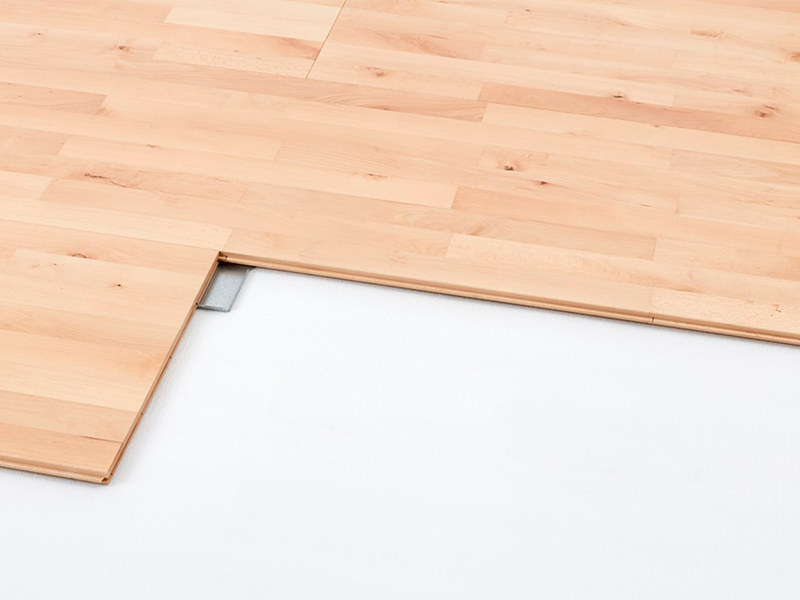
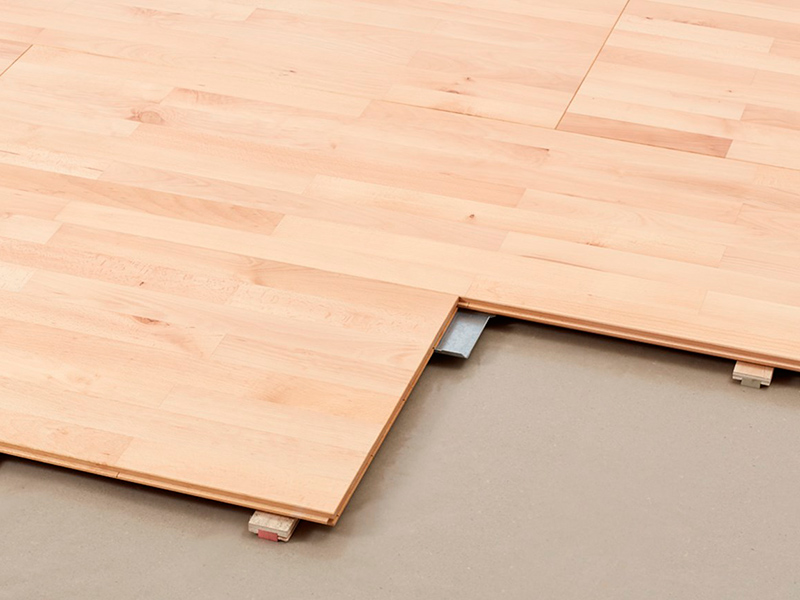
You will find a selection of portable solid hardwood floors, which consists of prefabricated lightweight panels, fast to assemble and disassemble. This type of flooring is particularly suitable for temporary use, e.g. sports events requiring special line markings, installation on top of ice rinks, or non-sporting events like concerts.
b) Fixed Floor
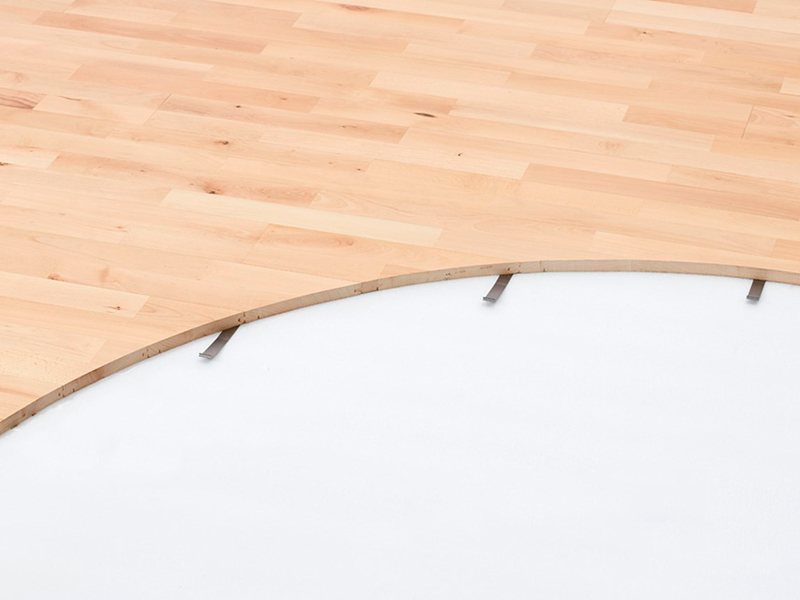
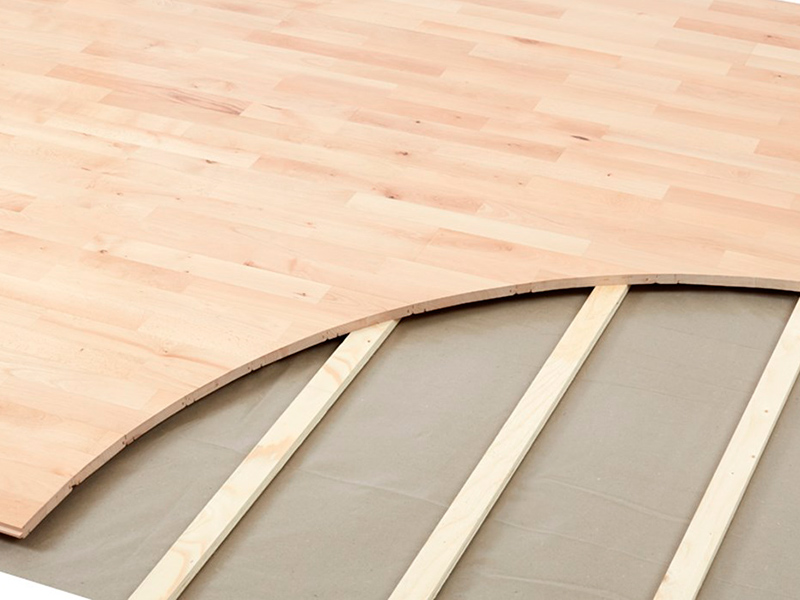
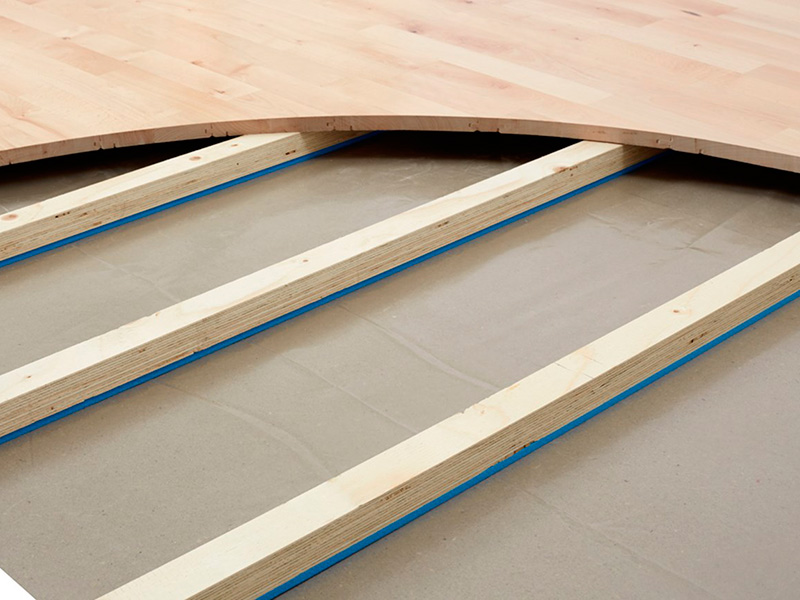
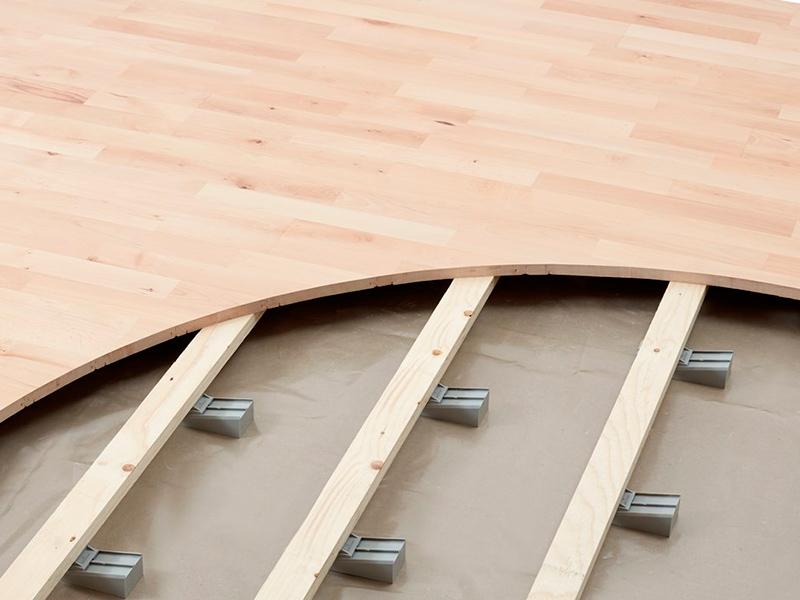
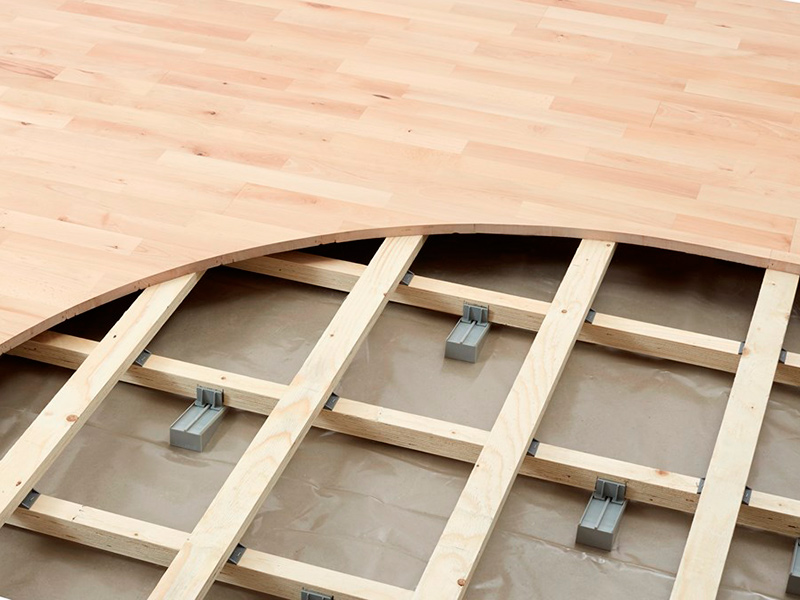
You will find a selection of fixed solid hardwood floors. In the range, there are both floating and batten floor solutions with a choice of sub-construction that meets most height and performance requirements. Construction height of floors (sub construction + floor board) ranges from 32mm to 245mm. There are solutions for both flat and uneven sub-floors.
EN 14904 The European standard for indoor sports floors
The performance of a sports floor is measured according to the European standard EN 14904, which specifies the requirements on the properties of sports floors. The standard divides the sports floors into 4 types:
- Area-elastic floors: When a point force causes deflection over a relatively large area around the impact point (wood)
- Point-elastic floors: When a point force causes deflection only at or close to the impact point (vinyl)
- Combi-elastic floors: An area-elastic floor with a point-elastic top layer, a point force will cause both localized deflection and deflection over a wider area (wood/vinyl)
- Mixed-elastic floors: Point-elastic floor combined with a synthetic material. The standard relates to both safety and sports technical properties and the most important key factors are described above